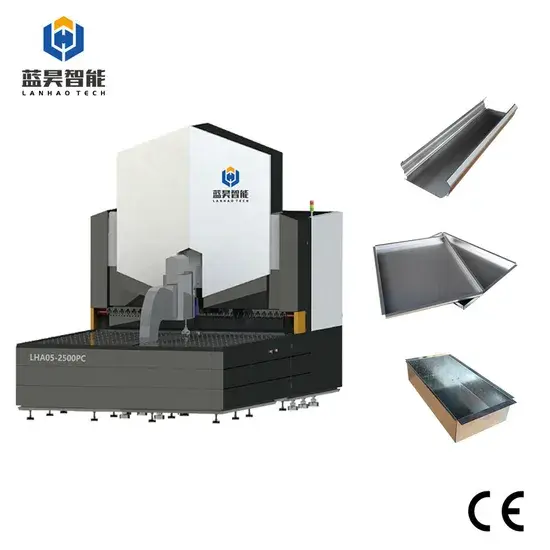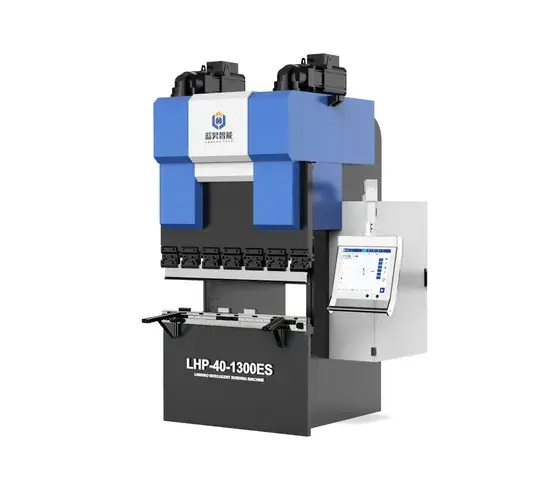
The core process difference
A press brake moves a ram and tool through a programmed stroke while an operator or robot positions the workpiece between bends. A panel bender typically holds and positions the blank while coordinated bending blades form edges around the part.
That difference changes handling, setup and the geometry each process completes most naturally. It does not make one technology universally better.
Use representative parts for the decision
Calculate cycle time from pickup through completed-part placement. Include tool changes, flipping, measurement and operator intervention. A headline bend speed alone cannot represent production output.
- Select the largest part and the smallest difficult part.
- Include a part with hems or return bends.
- Record setup, handling and inspection time separately.
- Compare finished quality and repeatability, not only speed.
Panel bender and press brake comparison
| Decision factor | Panel bender | Press brake |
|---|---|---|
| Typical strength | Automatic positioning and multi-side panel forming | Broad tooling and profile flexibility |
| Operator handling | Lower for compatible panel parts | Often requires positioning between bends |
| Tool change | Flexible blades; ATC available on selected systems | Punch-and-die changes based on job |
| Strong applications | Cabinets, doors, housings, panels | Profiles, deep boxes, special tools, varied work |
| Automation | Integrated part manipulation is central | Robot integration depends on part and tooling |
Relevant platforms